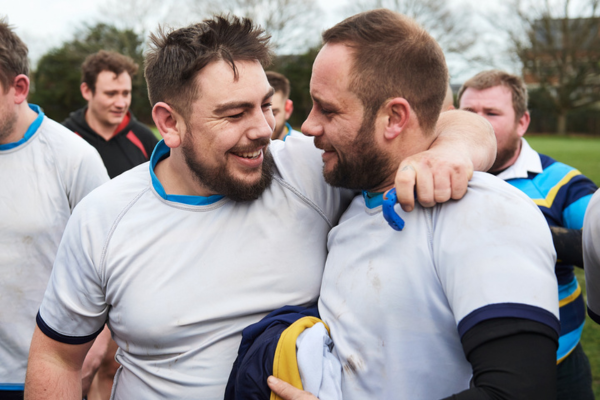
 Climate pressures are reshaping daily life across the UK but nowhere feels the impact more sharply than the Humber, a region where rising water, industrial emissions and deep‑rooted inequality collide. For David Gent, CEO of Active Humber (pictured right), this isn’t a future threat but a present reality, and he has spent the past seven years positioning sport and physical activity as a frontline tool for resilience, health and community strength.
As he prepares to open this year’s Why Sport 2026 Conference, David argues that the sector stands at a crossroads: either embrace sport’s role in tackling climate and inequality together, or risk falling further behind the needs of local people. In this interview with ConnectSport's Freya Webster, he sets out what must change, and how sport can help build a healthier, fairer, climate‑resilient nation.
STEP ONE: START WITH PLACE - COMMUNITY-LED CLIMATE ACTION
For David, meaningful climate action begins not with national policy but with place. The strongest entry point, he argues, is lived experience: the flooding of a local pitch, the heat that cancels training sessions, the poor air quality that keeps children indoors. "There is a tremendous opportunity in the community to bring the issues of climate change and environmental sustainability alive," says David. "Because all of us in the United Kingdom are having to adapt and deal with climate change now.”
This place‑based lens leads naturally to a second principle: climate action must be shaped with communities, not imposed on them. “Local people so often know what the solution is,” adds David. “Listen to the local communities, because they are aware of what needs to be done.”

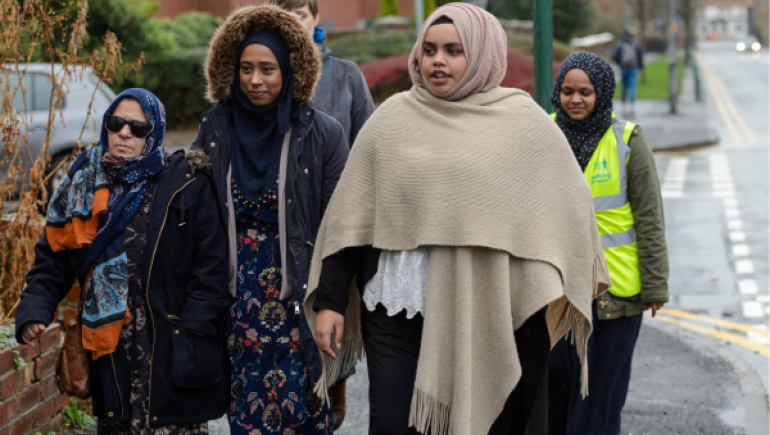
It is collaboration that turns this local insight into system‑level change. David describes the Humber (pictured above) as “blessed” to have a regional climate commission that brings together “an unknown number of disparate people” to confront shared challenges. In a region where industrial emissions are high and many communities sit below the high‑water mark, climate action is not ideological; it is existential.
Within these partnerships, sport’s role is distinct. It is not to lead on environmental science, but to lead on behaviour change. “It’s about my place here and now that is being affected,” David says. Sport creates conversations that “don’t talk down to people” but invite participation, ownership and problem‑solving at every level.
STEP 2: BUILDING CAPACITY - THE WORKFORCE CHALLENGE
While community insight is essential, David is clear that insight alone is not enough. “The biggest challenge we face at the moment is capability and capacity among the workforce,” he says. National strategies such as Sport England’s Every Move and growing sustainability commitments have pushed climate change firmly into the mainstream, and David is encouraged by the pace of change: “Over the last four or five years, there’s been an enormous shift going forward around climate change and environmental stability.”
Yet a major barrier remains. While most sector leaders are fluent in conversations about inequality, far fewer feel equipped to translate environmental sustainability into practical action. Many, David argues, are still unfamiliar with the UN Sustainable Development Goals, a framework he describes as a “marvellous methodology” for identifying where to intervene. Too often, climate and inequality are treated as separate agendas, when in reality they are “two sides of the same coin”.
Closing this gap requires investment in skills, confidence and leadership, embedding sustainability as a core competency rather than an optional extra.
STEP 3: POVERTY AND THE SYSTEM
Despite growing momentum on climate, David is unequivocal about the greatest obstacle to an active, resilient nation. “Without a shadow of a doubt, it is the unbelievable levels of poverty that we face in this country.” The Humber is one of the most physically inactive regions in England and also among the most economically deprived. The connection, he explains, is clear: “Those who are facing the greatest level of poverty are facing the greatest level of climate change.”
For many families, climate action is eclipsed by immediate concerns around safety, income and survival. Addressing inactivity and environmental risk therefore requires long‑term, place‑based investment, not short funding cycles or isolated interventions.
This reality sits at the heart of the Why Sport 2026 Conference’s central question: Has the health of the nation improved? For some communities, outcomes have improved. For many others, the system remains fragmented and difficult to navigate. As David notes: “One of the single biggest challenges we have is making that system genuinely focused on the needs of local people.”
Health, environmental sustainability and social equity are inseparable, yet governance structures often continue to treat them as distinct. Place‑based working, David argues, is not just a delivery mechanism but a philosophy: solutions must be shaped by local people if they are to last.
STEP 4: A CALL TO ACT
David’s reflections make one thing clear: the intersection of climate action, social impact and sport should be used as the driving force for how the nation moves forward, with sport and physical activity forming the backbone of a healthier, fairer and more climate‑resilient future. Place must be the starting point and collaboration the mechanism that binds systems, but ultimately progress depends on people.
That is why he ends with a message to every young person: “You are a leader. You’ve got a voice. Use it.” For David, youth leadership is not a future ambition but a present necessity, because young people see the links between climate, inequality and community life with a clarity the system often lacks.
Building on David’s position, ConnectSport is launching a Call for Articles on Climate Justice and Social Impact through Sport. The initiative, managed by Freya Webster, aims to spotlight how organisations across the UK are already using sport and physical activity to respond to climate pressures, tackle inequality and strengthen community resilience, while also connecting a growing network of practitioners driving this work. By sharing their stories and experiences, projects will help build an evidence base to support greater awareness, action and investment in this space.
Join David and Freya at the Why Sports 2026 Conference in London on March 12th.
This story supports these goals and missions: