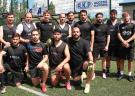
 ConnectSport has launched a Call for Articles on Sport and Migration showcasing how sport and physical activity-based projects across the UK are supporting refugees and asylum-seekers, and driving integration and cohesion in our communities. As projects share their stories and experiences, this will form an evidence base to support calls for more action to facilitate such initiatives. In this first article, Arthur Bloyce (pictured right), from Durham University, opens the call.
Through the course of 2025, toxic narratives villainising migrants appeared resurgent in UK political discourse. Often, these voices seem driven solely to problematise new arrivals as a malicious 'other', supposedly incompatible with British society. Asylum-seekers and refugees, in particular, bore the brunt of such rhetoric, and the legislative restriction that followed. I strongly believe much more needs to be done to combat these inaccuracies and misconceptions, and to humanise political conversation through the inclusion of personal stories and experiences from refugees and asylum-seekers themselves.
Sport is one of many areas of society where stories can be told to level the playing field, and rebalance the narrative. Immigration is a recurring feature in British elite sporting success stories, as evidenced by the #footballmovespeople campaign displaying the England men's national team’s internationally diverse backgrounds, or Sir Mo Farah’s documentary revealing how the four-time Olympic Gold medalist was trafficked into the UK when fleeing conflict.
HUMANISED
Sport is also recognised as having the potential to be a vehicle for personal and social development. It can offer refugees and asylum-seekers a valuable opportunity to build friendships, self-confidence and belonging within a safe space. If this can be done in attachment with the local community, it also offers chances to strengthen wider social bonds of trust, understanding and inter-connectivity. A good example is star player Adnan in Freddie Flintoff’s Field of Dreams TV series. He provides team-mates and viewers with a deeply moving and humanised depiction of the experiences of an asylum-seeker, and is a key part of the team's personal, communal and sporting growth throughout the series.
However, it is naive to assume that such positive social outcomes inevitably blossom from initiatives, without the cultivation of an environment driven to harness them. Sporting evangelists are rightly criticised for narrowly assuming its innate goodness, given the possibility of on-field conflict, hardening social divisions and shallow social transformation. This is not to say advocates and policymakers' faith in sport’s ability to strengthen society is misguided, but demands them to acknowledge this to be the product of the good practices developed by sporting administrators, coaches, and participants alike. For example, projects commonly look to maximise possible benefits through coaching approaches that facilitate an environment of enjoyment, safety and mutual respect.
EMPOWERED
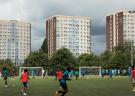
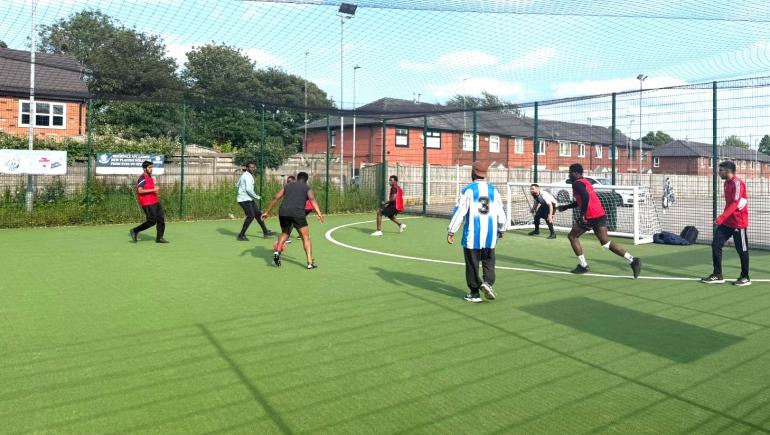
I recently collaborated with three programmes providing forced migrants with sporting opportunities. The participants I worked with were unanimously positive when reflecting on how their club made them feel. However, when asked what the most important thing about their club was, answers varied widely, and included being able to escape everyday life’s struggles, and feeling empowered by improving in their sport. The programmes were united in emphasising the importance of respect to their teaching, but also were adaptive in prioritising outcomes and techniques to best provide solutions to their own unique circumstances in terms of size, sport, participant will and community contexts. Nationally, many similar initiatives exist, though not with sufficient coverage or resources to claim a universal reach to the individuals and communities who would benefit from them.
By introducing an online space open to all members of UK-based programmes supporting migrants to share their initiatives, impacts and practices, through ConnectSport we can hope to encourage the UK Government and sporting national governing bodies to consider how effective sport provision for refugees and asylum-seekers especially can factor into their enthusiastic financial commitment to rejuvenating grassroots sport. This aligns with the UN Sustainable Development Goal 11 'Sustainable cities and communities'. Furthermore, such a platform can enrich both the nature of national conversation around immigration by amplifying immigrant, refugee and asylum-seeker voices in the media, and the quality of programme output through sharing knowledge and understanding between initiatives.
To respond to this Call for Articles, contact hello@connectsport.co.uk. We anticipate publishing one article per month throughout 2026.
This story supports these goals and missions: