
Leading cricket broadcaster Alison Mitchell believes that 'sport for change' journalism can play a vital role in tackling inequalities and giving "a voice to those who otherwise don't have one".
Alison was speaking following her success in the Sport for Change category at the recent SJA British Sports Journalism Awards in London.
Rather than rewarding match coverage or commentary, the award recognises journalism that shows how sport can influence wider issues such as equality, human rights, community development and environmental sustainability. The category was launched by the Sports Journalists’ Association (SJA) in partnership with ConnectSport CIC, the specialist media organisation which works with universities to promote the contribution of sport to sustainable development, and encourages journalists to tell stories that go beyond the field of play.
INJUSTICE
ConnectSport helped establish the original Sport for Change Award in 2018, recognising organisations that use sport to improve lives. After the success of that initiative, the idea was extended into journalism, creating a platform for reporters whose work explores how sport can challenge injustice and create meaningful change. As ConnectSport founder Simon Lansley states: “Journalists have a vital role in helping audiences understand sport’s contribution to society, not simply its entertainment value”.
Alison won for her powerful reporting on the Afghanistan women’s cricket team, whose players (pictured below) were forced into exile after the Taliban regained power. Reflecting on the story, she said: “This was never just about cricket - it was about identity, freedom and what happens when those things are taken away.” Her work gave voice to athletes whose careers had been taken away and highlighted how sport can become a lens through which much bigger global issues are understood. By returning repeatedly to the story via different channels and outlets – and helping fellow journalists to connect into the story – she showed the persistence and empathy that the award was designed to honour. “I felt a responsibility to keep telling their story,” she added. “Because for them, being forgotten would have been another kind of loss.”
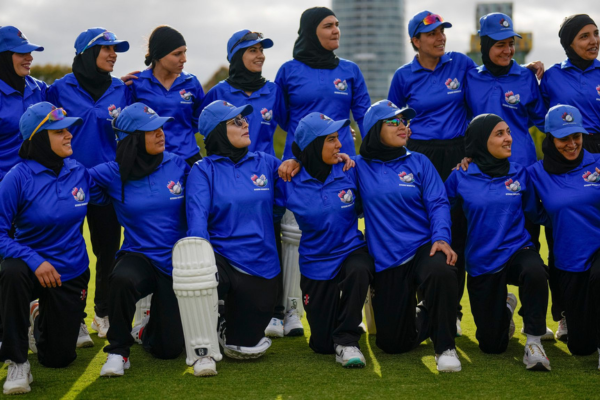
Alison told ConnectSport: “I'm really fiercely proud to be a journalist, as well as being a commentator and broadcaster. As a journalist, I think it shows that we can still hold people to account and challenge authority when necessary. By keeping stories alive, we can give a voice to those who otherwise don't have one. It’s still possible to help effect change - even in 2026.”
Her achievement also followed the inaugural winner of the journalism prize, ITV broadcaster Antoine Allen, who described receiving the same award the previous year as “the biggest achievement” of his career so far. Antoine was recognised for reporting on how sport addresses youth violence, climate change and inequality, setting the tone for what the category represents.
Alison’s recognition confirmed that sports journalism is evolving. “The most meaningful stories in sport often happen far away from the scoreboard,” she noted. Through the vision of ConnectSport CIC and the SJA, the award now highlights reporting that proves some of sport’s most important stories are not about who wins, but about how sport can change lives.
This story supports these goals and missions: