Four days after the 23rd FIFA men’s World Cup kicked off, Refugee Week also commenced, running from 15th to 21st June. In this article, Arthur Bloyce examines the role of the initiative in challenging some of the narratives surrounding this year’s edition of the tournament.
Having 48 competing countries gives the men’s World Cup even greater visible global diversity. Notably, one in four (23.6%) players selected will be representing a country to which they are foreign born. Yet the USA’s rejections and restrictions of player, staff and officials’ visas has demonstrated harsher persisting realities.
This underlines the importance of Refugee Week. Since 1998, the festival has championed the “contributions, creativity and resilience of refugees and people seeking sanctuary” according to Lara Deffense, the Week’s UK and Global Co-ordinator. Driven by guiding values of welcome, compassion, community and solidarity, Refugee Week supports grassroots programmes focused on positive cultural exchange and expression.
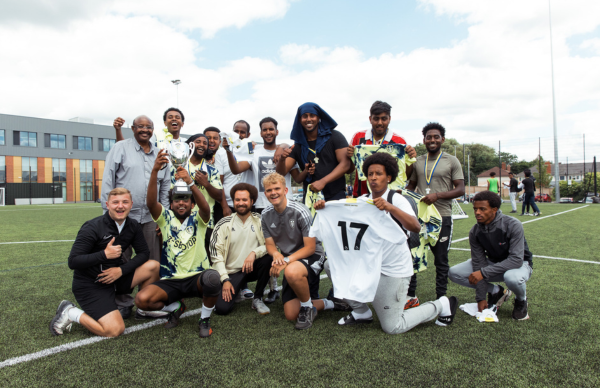
Lara explains: “At its heart, Refugee Week creates spaces for connection - bringing people together through culture, conversation, food, music, sport and storytelling to celebrate shared humanity and the communities that can be built together.”
This year ‘Courage’ is the key theme for the festival, since – according to Lara – it “speaks to both the courage of people forced to flee their homes and the courage required to build welcoming, inclusive communities.”
The initiative seeks to harness the positive emotional engagement and capacity for communal togetherness that a major sports event can bring. Lara notes: “Sport plays a significant role in Refugee Week due to its ability to bring people together across language, culture and background. It creates shared experiences, breaks down barriers and builds trust and belonging in immediate and human ways.”
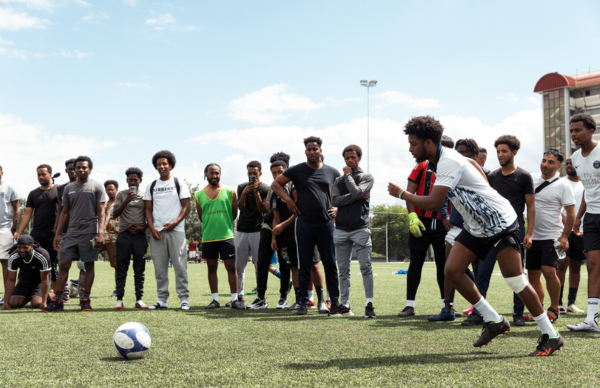
‘Move Together’ is one of nine ‘Simple Acts’ being promoted during Refugee Week. This could resemble anything from playing sports together in a local park, organising World Cup watch parties in community spaces or partnering with refugee organisations to host inclusive tournaments or matches.
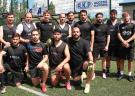
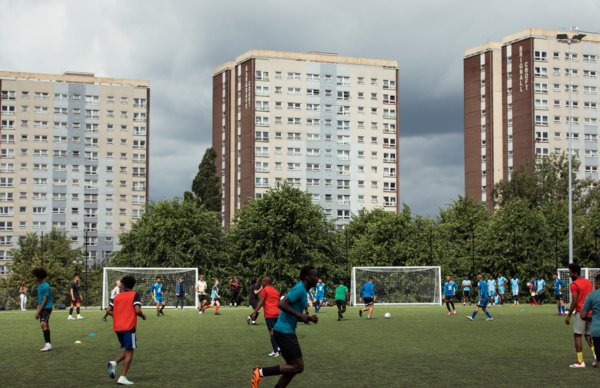
In Leeds, an annual football tournament coinciding with Refugee Week offers a powerful example of what this looks like in practice. Ali Mahgoub, from Leeds Refugee Forum, describes how last year 24 teams from different refugee communities participated, including six women-only teams, and three mixed teams.
Teams made up of charity staff, volunteers, local councils and police forces have also participated with the aim of “building a bridge towards mainstream organisations”. The tournament regularly involves football celebrities presenting the trophy to the winners, and is supported by the Leeds United Foundation among other sponsors. Ali stresses this is “not a competition” but “a chance to bring communities together… in a wellbeing way”.
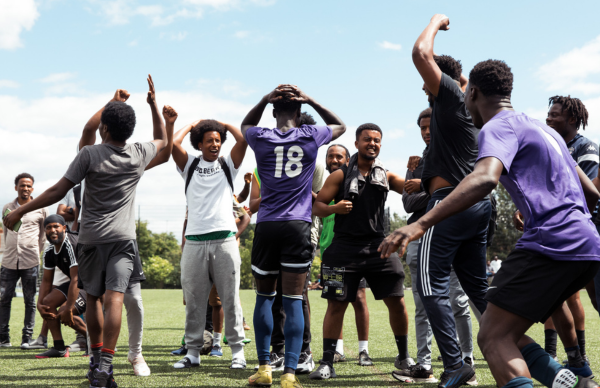
For Leeds Refugee Forum, the tournament suits the organisation’s mission to encourage stronger social partnerships, by harnessing the heightened enthusiasm for communal unity. The organisation was formed in 2003 and offers integration projects which upskill refugees and include training for local stakeholders. As such, Ali believes Refugee Week is the ideal opportunity to encourage collaboration between refugee-supporting organisations to put on events, and indicate the support they can offer. He says: “It gives them a flavour or a sense of working together. We can fill the gaps, and we can support more people.”
Simultaneously, Refugee Week allows for celebration of “what (refugees) have achieved, and what contribution they have made to the community”.
Thus the crossover of Refugee Week with the World Cup allows for a special chance to highlight and emphasise how positive connections can be made through 'sport for all'.
There are many ways to get involved in Refugee Week, including attending events, organising activities locally, sharing stories online, supporting refugee-led organisations or starting conversations within communities. Find these on the Refugee Week public calendar.
Participation spans schools, workplaces, libraries, sports clubs, cultural venues and grassroots groups. Activities can be simple - from hosting shared meals and film screenings to joining local events or creating spaces for dialogue and connection. This year also features nine ‘Simple Acts’, illustrated by Quentin Blake, offering accessible ways for anyone to take part.
Visit refugeeweek.org
This story supports these goals and missions: