Amongst the excitement of the World Cup this summer, a lesser known but no less inspiring tournament took place: Newcastle United Foundation’s Refugee Week Tournament. Harper Dunne reports for ConnectSport.
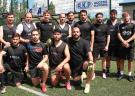
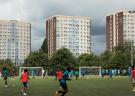
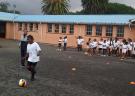
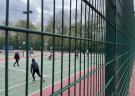
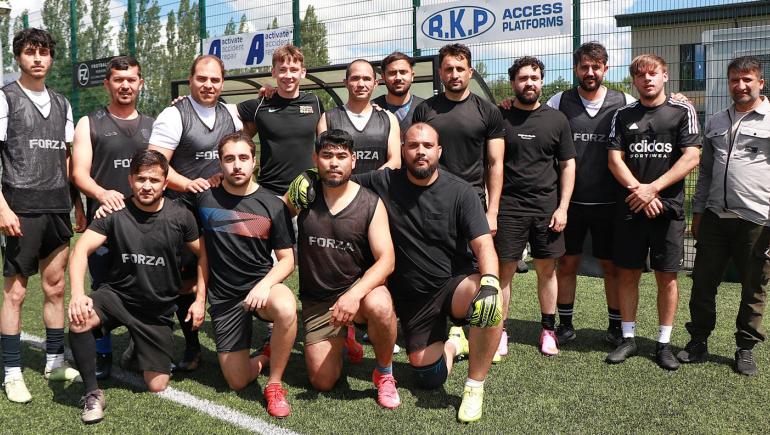
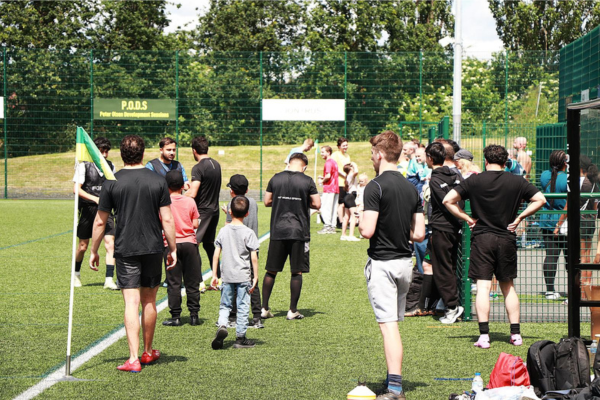
This was the tournament's third year, run in partnership with Newcastle City Council's Active Through Football programme. Teams gathered from Ashington, Durham, and Newcastle, but players who now call the North-East of England home came from backgrounds far more global. There was everything you would expect from a typical 11-a-side football tournament: strong tackles, silky skills and top-bin finishes on show throughout the day. The Foundation also ran an eight team, six-a-side tournament, as part of its Refugee Week programme.
FRIENDSHIPS
“We try to bring different regions together,” explained Shayan Gazerani, the Foundation's Project Coordinator for Employability for Refugees. The project also runs weekly family sessions, badminton and a range of activities beyond football. Gazerani says that attendees tell him it changes their lives by helping them find friends and settle into their new home. One former participant who used to be a professional football player in Afghanistan has shifted from beneficiary to provider, pursuing his coaching badges and now working for the Foundation.
Newcastle and Durham are both Sanctuary Cities, and Noel Hanlon, strategic lead on Active Through Football for the Newcastle City Council, encourages both refugees and locals to see for themselves what this is all about. Meeting people, asking questions and joining in with what the city has to offer is the best way to promote “community togetherness” in his eyes. He has watched friendships form across language barriers - connections that wouldn't exist without the game pulling people onto the same football pitch.
Hamid plays for Durham Afghan United and scored one of their seven goals in their first match. He, his brother and his colleagues served alongside the British Army for 11 years, before coming to the UK through the Afghan Relocations and Assistance Policy. For him “it’s not different playing” compared with in Afghanistan. Only the turf is unfamiliar, as Afghanistan doesn't have artificial pitches, but the game is the same in the UK as it is 5,000 miles away. Through their own communal resilience and the support of local community stalwarts, Hamid and his friends and family have effectively built a new life for themselves in Durham. Playing football together weekly offers an escape from challenges beyond the pitch, and the group’s enthusiasm for having some formalised training and competition reflects how aspiring to improve can be empowering.
Hamid and his friends also brought their children to the tournament, who are well-integrated into the Durham local club football system. They are not all that different from a young Elliot Anderson, whose boyhood club was the hosting venue for the six-a-side tournament. They have the same big dreams and the same simple joy of having a ball at their feet.
TOURNAMENT
Mohammed, who is from Yemen and was playing in his first UK tournament, echoed Hamid’s point: in Yemen, football was always played in the street. However, what he values most is that he met one of his best friends through football. His friend also competed in the Refugee Week tournament, but on a different squad. Their match was extremely hard-fought, but afterwards they were back to being mates.
This duality of competition and camaraderie is a powerful feature of sport. This year’s World Cup has been marked by a dichotomy. It has yielded stories of visa restrictions and geopolitical tensions, but also stories of connection, like the unexpected bond between Algerians and Kansans, or Scotland fans attending a Major League Baseball game in Boston.
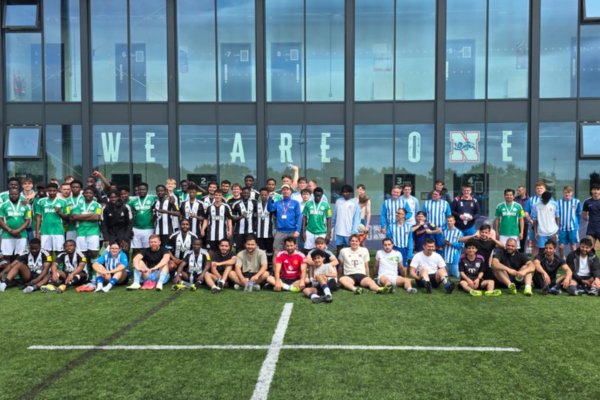
Just as people from across the world have come together in the spirit of competition despite differences in politics or backgrounds, in Newcastle none of the participants were defined by the politics that brought them there. They were simply midfielders, strikers or coaches-in-training.
One line puts it best. Through football, Hamid explained “we bring pride for our community”. In a world that often sees refugees as a problem to be solved, the football pitch offers a different perspective: a community with something to celebrate.
This story supports these goals and missions: